When NuromBoard fits better
PDFs, documents, and research materialsMind maps, flowcharts, and whiteboards on one shared working fileTurning documents and meetings into reusable structuresTeam workspaces with members, templates, and shared structure
paper reading tools and NuromBoard solve overlapping problems in different ways. Compare how each tool handles documents, meetings, diagrams, collaboration, and reuse after the session.
| Dimension | NuromBoard | paper reading tools |
|---|---|---|
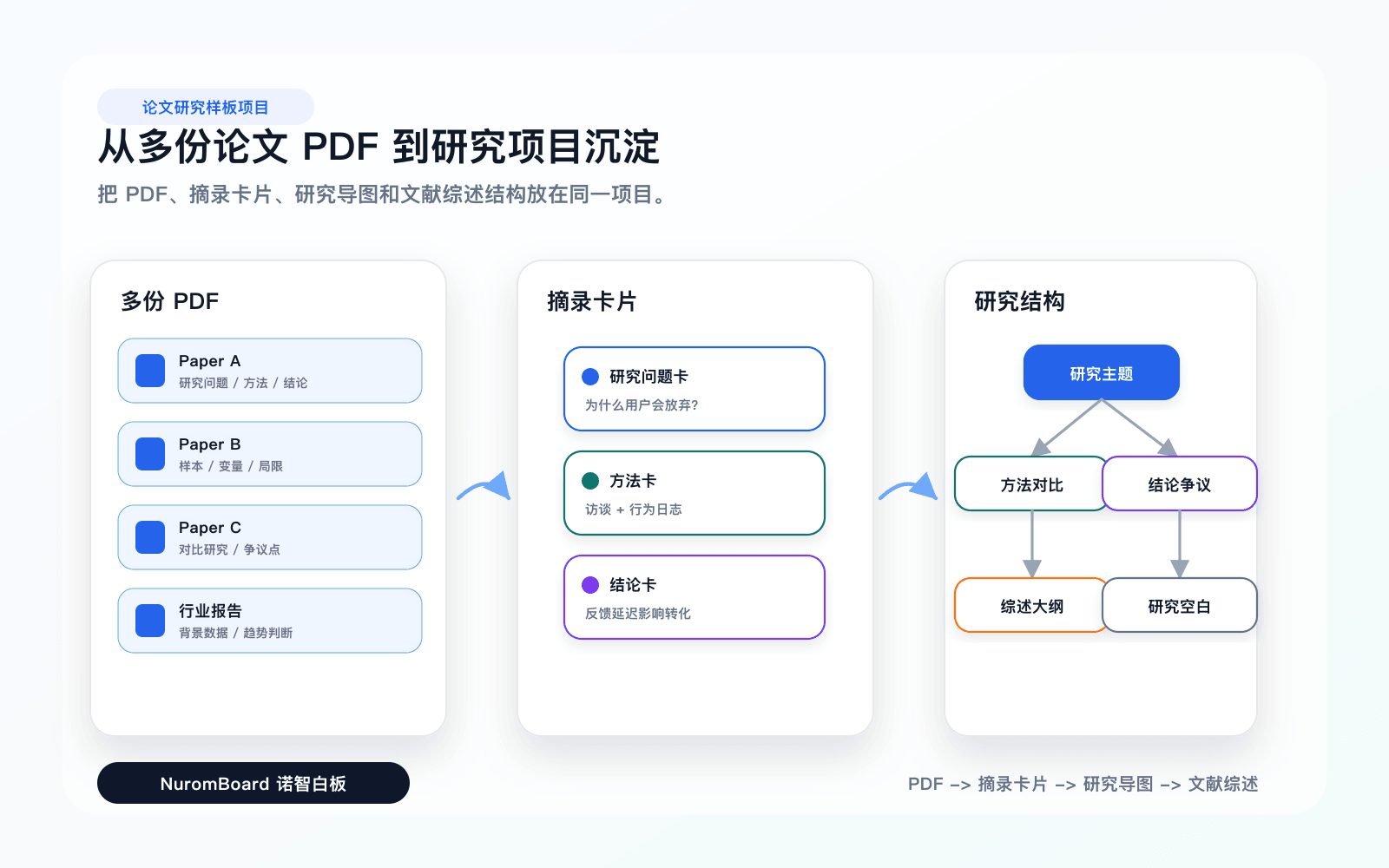
| Starting point | Start with PDFs, notes, documents, or meetings and shape them into a shared structure on one working file. | paper reading tools is strongest when the starting point already matches its primary workflow. |
| After the meeting | Structure lasts after the session — editable maps, flows, and decisions the team keeps using. | Follow-up value depends on how teams use paper reading tools after live work or generation. |
| Material handling | Keep source material, excerpts, notes, and the resulting diagram connected in one project. | Source material handling depends on the workflow and integrations provided by paper reading tools. |
| Output | Move between mind maps, flowcharts, whiteboards, knowledge cards, and project structures. | paper reading tools emphasizes the visual formats and collaboration patterns it is best known for. |
| Team collaboration | Teams share one working file with member management and reusable templates — discuss, co-edit, present, and revisit versions together. | Depends on the sharing and collaboration model paper reading tools provides. |
| Long-term reuse | Keep decisions and context available for review, editing, and handoff on the same file. | Reuse is strongest when your team already works comfortably inside paper reading tools. |
Compare whether your work begins with source material or with a ready-to-draw structure.
Choose the workflow that can produce the diagrams, notes, cards, or project structures you will actually reuse.
If real-time workshops or formal diagram standards are central, paper reading tools may be the more direct fit.
Start with PDFs, notes, documents, or meetings and shape them into a shared structure on one working file.
paper reading tools is strongest when the starting point already matches its primary workflow.
Structure lasts after the session — editable maps, flows, and decisions the team keeps using.
Follow-up value depends on how teams use paper reading tools after live work or generation.
Keep source material, excerpts, notes, and the resulting diagram connected in one project.
Source material handling depends on the workflow and integrations provided by paper reading tools.
Move between mind maps, flowcharts, whiteboards, knowledge cards, and project structures.
paper reading tools emphasizes the visual formats and collaboration patterns it is best known for.
Teams share one working file with member management and reusable templates — discuss, co-edit, present, and revisit versions together.
Depends on the sharing and collaboration model paper reading tools provides.
Keep decisions and context available for review, editing, and handoff on the same file.
Reuse is strongest when your team already works comfortably inside paper reading tools.
NuromBoard turns documents and meetings into shared structures teams keep editing — not a one-shot diagram or a workshop board that freezes when the session ends.
Mind maps, whiteboards, and documents live in the same project so individuals can start and teams can continue without export or copy-paste.
Start from PDFs, briefs, and meeting notes; AI drafts the structure, then people refine nodes and versions together.
paper reading tools may be the more direct choice when your task matches its core interaction model and established ecosystem.
Existing teams may prefer paper reading tools when their templates, collaboration habits, and shared files already live there.
| Your task | Recommended choice | Why |
|---|---|---|
| You have complex source material to organize | NuromBoard | It connects documents, notes, visual structures, and project context. |
| You need a focused paper reading tools workflow | paper reading tools | A focused tool can be faster when the input and output are already clear. |
| You need to revisit and reuse the result | NuromBoard | The workspace keeps the result connected to the surrounding context. |
Open the workflow page to see how NuromBoard organizes materials and produces structured outcomes.
View workflowOpen the workflow page to see how NuromBoard organizes materials and produces structured outcomes.
View workflowOpen the workflow page to see how NuromBoard organizes materials and produces structured outcomes.
View workflowNot in every workflow. paper reading tools may be a better fit for its core use case, while NuromBoard is a team whiteboard for connecting documents, meetings, and continued work on one shared file.
Choose NuromBoard when your starting point is a PDF, document, research note, or meeting record and you need an editable structure your team keeps using after the session.